

Summary
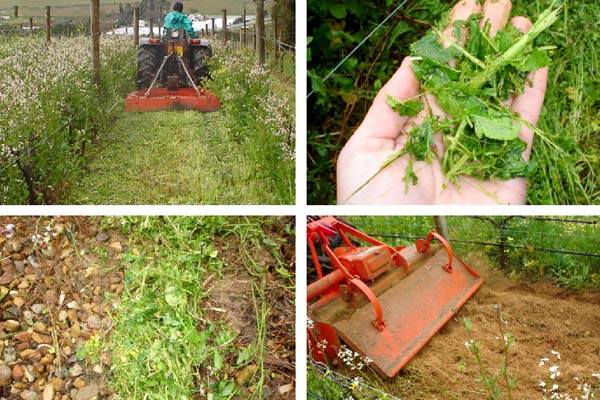
Ensuring economically and environmentally sound methods for soil pest management and for the restoration and preservation of the health of soils and substrates is a key task for vegetable producers both in the open field and in cultivation facilities. Often, for various reasons, disease-causing agents and pests accumulate in the soil, and their presence jeopardizes entire production cycles. The article reviews the most common methods of soil disinfection in greenhouses – physical, chemical and biological – and the pests they target. Among the physical methods, steaming and solarization are included, along with the physical parameters under which they are effective – temperature, humidity, duration of exposure. Among the chemical methods, fumigation with Basamid Granulate and Nemasol 510, the application of Velum Prime SC through the drip irrigation system and Nematrin 10 G with subsequent incorporation, against root-knot nematodes, are discussed. Among the biological methods, biofumigation and the introduction of biological agents into the soil are included.
- It protects the plants. Disinfection eliminates pathogens and pests that adversely affect plant health and yield;
- It improves soil quality: Effective disinfection improves nutrient uptake and maintains a healthy ecosystem, which is key for healthy root systems;
- It protects against future problems in the long term. Regular disinfection can help prevent the recurrence of soil-borne diseases;
Good practices for enhancing the effect of disinfection are:
- Pre-testing of the soil to identify the composition of pathogens and pests, or nutrient deficiencies;
- Careful cleaning of plant residues from the previous vegetation. Removal of all plant and other materials from the surface to improve the efficiency of the selected disinfection method. Cleaning and washing of the glass and the structure. Soil preparation and moistening in accordance with the requirements of the applied methods. Destruction of weeds around the greenhouse.
- After disinfection, the condition of the soil is examined to ensure a balanced ecosystem and to prevent future problems.
By applying these good agricultural practices, the soil can be effectively disinfected, which will lead to the cultivation of healthier plants and higher yields.
Many plant pathogens and pests are transmitted through the soil. There they overwinter or pass through a certain stage of their development. Intensive and monoculture cultivation of vegetable crops in cultivation facilities leads to the accumulation of pathogenic microorganisms and pests in the soil. Losses caused by soil-borne pathogens are considered to account for 1/3 of the losses caused by all pathogens. Various methods are applied to control soil pests - physical (steaming, solarization), chemical (fumigation) and biological (biofumigation).
Soil disinfection aims to destroy: pathogens causing damping-off and root rot; nematodes; soil pests; weed seeds, etc.
Physical methods of soil disinfection
Soil steaming
It covers all groups of pests found in the soil. A very efficient but costly method. It is applied only in greenhouse complexes that are gasified. The soil is heated with steam to 82°C for 30 minutes. It penetrates deeply and ensures complete disinfection. Steaming effectively destroys pathogenic bacteria, viruses and fungi without leaving chemical contaminants. Key considerations in steaming include soil moisture levels and treatment depth. For optimal results, the soil should be at or below 20% moisture to prevent evaporation and reduced efficiency. Steam injection points should be located 10-15 cm apart, with each application lasting about 3-5 minutes. A disadvantage of the method is that it has no selectivity. Along with the pathogenic organisms, saprophytic and beneficial species are also destroyed. A “biological vacuum” is created, along with the possibility of rapid recolonization of the soil with pathogens – the “boomerang effect”. The high temperature causes changes in some chemical compounds, which leads to acidification of the soil reaction, release of toxic substances and changes in nutrient availability. With this treatment: nematodes die at up to 50оС; at 60-72оС bacteria and soil fungi are eliminated; above 82оС - almost all weed seeds, viruses, insects and other pests. One treatment cycle can reduce soil diseases by up to 99%, which makes it an attractive choice for greenhouses with sensitive crops or for those struggling with recurring pests. To achieve a good result, the soil must be well prepared. It can be combined with subsequent application of beneficial microorganisms.
Soil solarization
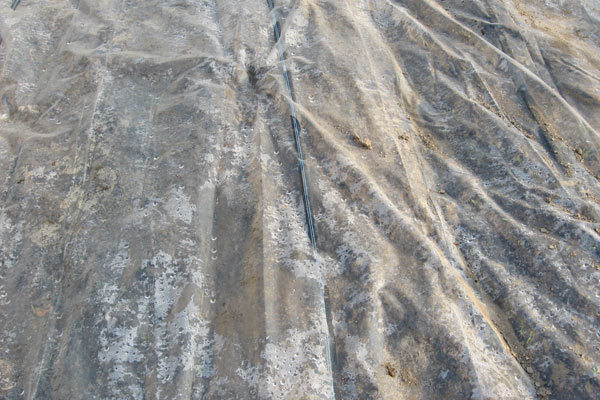
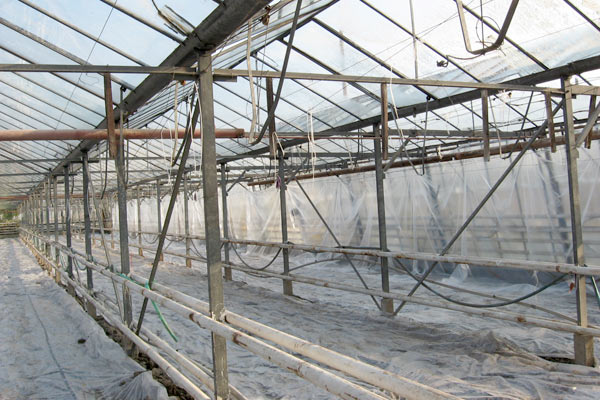
Solarization is a non-chemical method of soil disinfection using solar radiation. The soil is well moistened, covered with transparent film and left for 4-6 weeks in sunny weather. The polyethylene film serves as a trap for capturing solar energy.
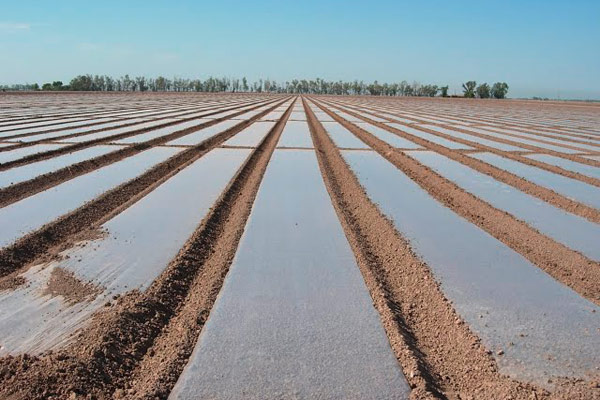
The application of this method has been continuously increasing in recent years. It uses the days of intensive sunshine in July and August, when daytime temperatures exceed 32оС. The temperature under the film rises to values lethal to soil pests and weed seeds.
Advantages of the method:
- no harmful effect;
- low environmental impact;
- longer-lasting effect on disease-causing agents;
- increases yield and product quality due to biological and chemical mechanisms;
- a significantly cheaper method than steaming;
- there is no „biological vacuum”, therefore no „boomerang effect”, because solarization represents pasteurization of the soil. It preserves the beneficial flora and fauna;
- soil water content is improved;
- the mulching period can be shortened if combined with other methods.
Disadvantages of the method:
- the covered area cannot be used for 1-1.5 months during the hottest period of the year;
- unpredictability of climatic and biological conditions;
- problem with polyethylene recycling;
- a more limited spectrum of action compared to chemical fumigants.
Soil preparation: The soil is cultivated so as to provide a smooth surface for the polyethylene film to adhere tightly to it. The presence of coarse fractions and plant residues can lead to the formation of air pockets, which will isolate the soil and reduce the rise of its temperature to the necessary effective values.
Soil moisture: Soil moisture must be no less than 70% of field capacity, and the depth of the moist layer - no less than 60 cm.
Soil temperature: The effective temperature of the solarized area must reach up to 60оС at a depth of 10 cm, which guarantees the destruction of weed seeds and soil-borne pests.
Exposure: Required period of action – 4-6 weeks. When combined with other methods, this period can be shortened.
The effect of solarization will increase if, after its completion, biological products such as Trichodermin (10–15 kg/da) and others are applied to the soil.
Quality solarization depends on the quality of the polyethylene, soil moisture, air temperature, intensity of solar radiation and others.
Chemical methods of soil disinfection
The application of soil fumigants is key to the successful control of soil pathogens and pests. Particular attention is paid to application methods and technologies to ensure optimal delivery and distribution with maximum effect on the target pest. Most of the commercial fumigants still available today are introduced into the soil in liquid form to the desired depth with various equipment. The chemicals are distributed in a liquid phase and spread through the soil in order to reach every niche occupied by pests. The degree of control depends on the distribution of the fumigant in the soil, on the fumigant (and its properties) and the dosage, as well as on the injection depth. The latter is usually limited to 30 cm, which is not always sufficient. The application of fumigants with water through the drip irrigation system ensures delivery to deeper layers and is the most common practice worldwide. It provides uniform delivery, provided that the water distribution is uniform and the chemical does not penetrate into the deeper layers. The application of soil fumigants through drip irrigation is practiced mainly in seedling beds and greenhouse production. The main advantage of this type of application is the improved distribution of fumigants in the soil. However, it requires a special emulsified formulation of the fumigant and a suitable irrigation system.
The combination of chemical fumigants with solarization is widely accepted and practiced. An improvement in this technique was made by Eshel et al. (2000), who showed that the sequential application of first solarization and then injection of a fumigant two weeks later further improves pest control at reduced rate and amount of fumigant. This approach is widely adopted in Israel in drip-irrigated fields (Gamliel, 2012).
Basamid Granulate (a.i. dazomet) is a fumigant for the disinfection of soils and substrates free of crops. Active substance - dazomet 98%; LD50 520 mg/kg. Granular fumigant. Upon contact with moist soil, dazomet decomposes into methyl isothiocyanate, formaldehyde, methylamine, hydrogen sulfide. It is applied at a dose of 50-70 kg/da.
Effective against: nematodes – root-knot and cyst-forming; soil fungi – Pythium, Phytophthora, Verticillium, Fusarium, Rhizoctonia, Pyrenochaeta, Phoma, Didymella, etc.; weeds - stinging nettle, annual bluegrass, shepherd's purse, lamb's quarters, chickweed, barnyardgrass, foxtail, black nightshade, etc.; soil pests – larvae of wireworms, cutworms, cockchafers, etc. In trials conducted at the Maritsa Vegetable Crops Research Institute in Plovdiv, high efficacy of the product against root-knot nematodes (Meloidogyne spp.) was reported, ranging from 96.84% to 100%.
Upon contact with moisture in the soil, dazomet degrades to methyl isothiocyanate, which is active against root-knot nematodes, soil-borne fungi, weed seeds and some soil pests. The distribution and movement of the toxic gases depend on the soil structure, soil temperature and moisture. After the exposure period is completed, the facilities are opened. After ventilation, the polyethylene cover is removed. After 2-3 days the soil is rotavated. Degassing continues for another 5-7 days. Disinfection with Basamid G is carried out at intervals of 3-4 years.
The following requirements must be observed when applying it:
- the most suitable soil temperature for the action of the product is from 12оС to 15оС;
- for the uniform distribution of Basamid Granulate, the soil must have a fine structure, well prepared as for sowing;
- to achieve optimal action of the product, it is necessary to moisten the soil 8-14 days before treatment to full field capacity or at least 60-70% moisture;
- the product is in the form of small granules, which during application are distributed evenly over the soil surface, preferably with the help of a tractor equipped with an applicator, since the product is highly toxic.
- the product must be incorporated into the soil;
- this is followed by rolling, surface irrigation with water as a seal or placement of a polyethylene cover;
- exposure time 7 - 15 days, depending on the temperature during treatment;
- after the fumigation period, the soil is degassed by cultivating it and leaving it to ventilate;
- quarantine period 45-50 days at 70-80% of field capacity;
- the doses of Basamid G are determined depending on the pests, the type of pathogens and the soil type;
- a suitable period for soil disinfection is late summer or early autumn;
- after the degassing period, a „cress test” must be carried out to establish the degree of degassing. In small, sealed containers (jars), an average sample is taken from the 0-30 cm layer. It is placed in the jar, moistened, and covered with filter paper or cotton wool. Cress or lettuce seeds are placed on the cotton wool. The jar is closed tightly. The result is read after 3-4 days. If the seedlings are fresh, degassing is successful; if they darken – there are still residues of methyl isothiocyanate in the soil and degassing must continue.
Nemasol 510 (a.i. metam sodium)
The active substance is metam sodium 510 g/l. It is registered in the country at a dose of 80 and 100 l/da for control of root-knot nematodes, soil pathogens (Pythium, Verticillium, Fusarium, Rhizoctonia, Pyrenochaeta, Sclerotinia) and weed seeds. The product can be used for soil disinfection in glass greenhouses (in the absence of plants), with the higher dose applied in cases of predominant pathogen infestation. It is applied by means of an applicator with rolling, as well as through drip irrigation systems, followed by covering with polyethylene.
The following requirements must be observed when applying Nemasol 510:
- the soil must be prepared before application of the product as for sowing, free of weeds and plant residues;
- on the day of application, its moisture must be 50-60% of field capacity;
- when applying the product through the drip irrigation system, the hoses must be placed in two lines for each row of plants under the polyethylene;
- the application is carried out with a dosing pump of the Dosatron type, with which Nemasol 510 is injected into the irrigation system;
- the concentration of the solution depends on the total amount of water that must be applied to achieve moistening of the soil to a depth of 20-25 cm;
- it is effective in the zone into which the solution penetrates;
- after application, the irrigation hoses must be flushed with clean water;
- two weeks after application, the polyethylene cover must be removed and then another 7-10 days are allowed;
- for good degassing, soil cultivation must be carried out. The duration of fumigation and degassing are directly dependent on soil temperature. At lower temperatures they are prolonged, and at higher temperatures the quality of disinfection may deteriorate due to the rapid escape of gas from the soil. The exposure is as with Basamid G.