

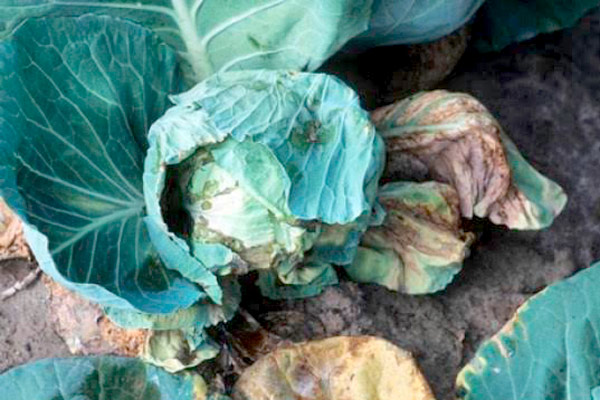
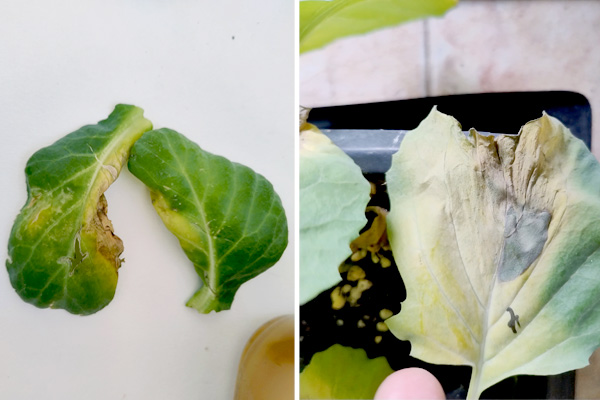
Abstract Black rot is recognized as the most significant bacterial disease of cabbage and other crops of the Brassicaceae family, due to its wide distribution, high aggressiveness, and significant economic losses. The causative agent of the disease is the bacterium Xanthomonas campestris pv. campestris. Infection can begin at virtually any stage of plant development — from the germination of infected seed to fully developed maturity. The disease can remain latent for weeks, which complicates early diagnosis and allows unnoticed spread within the crop. In addition to infected seeds, the disease also spreads from soil, plant residues, as well as from various natural and mechanical factors such as wind, insects, water splashes, rain, or agricultural machinery. Keywords: black rot, bacterium, Brassicaceae family Black rot is one of the most serious and destructive bacterial diseases of crops of the Brassicaceae family, distributed in all agro-climatic zones of the world (Singh and Dhar, 2011). It affects both vegetable crops such as cabbage, cauliflower, broccoli, turnip, and radish, as well as wild cruciferous species that serve as a reservoir for the pathogen. This makes the disease particularly difficult to control, as the sources of infection are often located outside cultivated areas. The causative agent Xanthomonas campestris pv. campestris (Pammel) Dowson is a seed-borne, gram-negative, aerobic bacterium characterized by high adaptability, significant race diversity, and the ability for systemic penetration into the vascular tissues. The disease has been described as "one of the most devastating" for cruciferous crops, with losses in severely affected regions reaching up to 30% of yield (Preethi & Umesha, 2025). Under favorable conditions — heavy rainfall, high humidity, and temperatures between 25 and 30°C — the disease becomes even more harmful and leads to significant losses (Vega Álvarez et al., 2021). Infection can occur at any stage of plant development — from the germination of infected seeds to maturity. The main route of spread is through infected seeds, where even minimal levels of the bacterium can lead to epidemics (Liu et al., 2022). This is a particular problem in transplant production, where a large number of plants are grown in a limited space and infection can spread rapidly. The pathogen is also transmitted through contaminated soil, plant residues, wind, insects, aerosols, irrigation water, rain, and agricultural machinery (Vicente and Holub, 2013). Xanthomonas campestris pv. campestris survives in plant residues for up to two years, which underscores the importance of good hygiene practices and proper management of plant waste. Bacteria most commonly enter through hydathodes at the leaf margins — natural openings through which plants exude water. Hydathodes represent a kind of "weak point" in the leaf tissue, as they are directly connected to the vascular system and do not possess barriers against pathogens as effective as the epidermis. When water droplets from rain or irrigation are present on the leaves, bacteria easily move toward these openings and penetrate the tissues. This explains why the first symptoms often appear at the leaf edges — the zone where hydathodes are most numerous and most active. The pathogen can also penetrate through wounds caused by machinery, insects, animals, rain, or wind. Even microscopic damage to the epidermis is sufficient to allow bacteria to enter. During heavy rainfall or hail, the risk of infection increases sharply, as mechanical injuries to leaves and stems create numerous entry points. Insects that feed on leaf tissue also facilitate penetration by carrying bacteria onto stomata and wounds. After penetration, bacteria spread intercellularly, first colonizing the mesophyll — the tissue responsible for photosynthesis. In this early phase, the infection often remains unnoticed, as the plant is still able to compensate for local damage. Gradually, however, the pathogen reaches the vascular system, where it multiplies intensively and causes rapid systemic spread. In the xylem, bacteria produce exopolysaccharides and enzymes that clog the vascular vessels and disrupt water movement. Simultaneously, xylem collapse, spread of the bacterium into surrounding parenchyma cells, cell death, and formation of cavities are observed. These cavities are often filled with bacterial exudate, which appears as yellowish droplets when cut. In humid and warm weather, the infection develops extremely rapidly. High humidity facilitates the movement of bacteria on the leaf surface, and heat accelerates their division — under optimal conditions, the population can double in less than an hour. Therefore, visible symptoms can appear within hours, especially in young plants whose tissues are softer and more susceptible to systemic penetration. The symptoms are highly characteristic and include (Figure 1): • large, often V-shaped chlorotic spots at the leaf periphery, directed toward the midrib; • blackening of the veins and vascular vessels in the leaves, petioles, and stem; • stunting, unilateral growth, and premature leaf drop; • systemic wilting and darkening of internal tissues; • in turnip and radish — dry rot of the fleshy roots; • in cabbage and cauliflower — discoloration and rotting of the heads. In cross-section, blackened vascular tissues, yellow droplets of exudate, and cavities filled with bacteria are observed. Infected areas are often secondarily attacked by bacteria causing soft rot, which destroy the tissues and produce an unpleasant odor. This further deteriorates the quality of the produce and renders it unfit for consumption or storage. Figure 1. Black rot on cabbage leaves Numerous pathogenic races of Xanthomonas campestris pv. campestris have been reported in different Brassica species. Initially, Vicente et al. (2001) identified six races (1–6). Later, Fargier and Manceau (2007) added three more (7–9), and recently two new races — 10 and 11 — were described in Portugal (Cruz et al., 2017). Currently, eleven physiological races are known, with races 1 and 4 being the most aggressive and most widely distributed (Lema et al., 2012a; Vicente and Holub, 2013). Resistance to black rot is polygenic and involves complex cellular and biochemical defense mechanisms (Deng et al., 2023). Genomic approaches — whole-genome sequencing, multilocus analysis, and comparative genomics — enable a better understanding of the evolution, pathogenicity, and distribution of different strains. This knowledge supports breeding programs and accelerates the development of resistant varieties. Effective curative agents are lacking, so management is predominantly preventive. Control of black rot is based on a combination of hygienic, agrotechnical, biological, and breeding approaches aimed at limiting primary sources of infection and reducing conditions favorable for pathogen development. The most important measures include: • use of bacteria-free seeds and transplants — this is a key element, as seed-borne transmission is the primary mechanism for epidemic emergence. Even a minimal amount of bacteria on seeds can lead to mass infection in transplant production. Therefore, certified seed material and regular testing by molecular methods (PCR, Bio-PCR) are critical for a safe start to the production cycle. • hot water seed treatment (50°C for 30 min) — this method is one of the few proven effective against Xanthomonas campestris pv. campestris. Heat destroys bacteria on the seed surface without damaging germination. The procedure is particularly useful for home-saved seeds or when contamination is suspected. • destruction of plant residues and observance of crop rotation (at least 2 years without Brassica) — the pathogen can survive in plant residues for up to two years, making proper waste management crucial. Long crop rotation interrupts the bacterium's life cycle and reduces its accumulation in the soil. Burning or deep plowing of infected residues prevents secondary infections. • avoidance of overhead irrigation — water splashes facilitate the movement of bacteria on the leaf surface and facilitate their penetration through hydathodes. With overhead irrigation, the risk of infection increases many times over, especially in warm weather. Drip irrigation is preferred, as it keeps the leaf mass dry and limits the spread of the pathogen. • control of weeds of the Brassicaceae family — wild cruciferous species often serve as a natural reservoir for Xcc. Weeds such as wild mustard, rapeseed, or wild crucifers can maintain the pathogen population in the field even in the absence of cultivated plants. Their regular removal reduces the risk of primary infection. • sprays with copper fungicides at 10-day intervals to limit the surface bacterial population — copper preparations do not cure systemic infection but reduce the number of bacteria on the leaf surface and limit secondary infections. They are most effective as part of an integrated strategy and applied preventively, especially during periods of high humidity. • biological methods — antagonistic microorganisms and resistance inducers — this is a rapidly developing field. Strains of Bacillus, Pseudomonas, and actinomycetes show promising results for suppressing Xcc through competition, production of antimicrobial substances, or stimulation of plant immunity. Resistance inducers activate plant defense mechanisms but are still being studied for optimal doses, stability, and field efficacy (Liu et al., 2022). • long-term strategy: breeding of resistant varieties, supported by molecular markers and genomics-assisted selection — this is the most promising approach for sustainable reduction of losses. Resistance to black rot is polygenic, which makes traditional breeding difficult. Modern genomic technologies enable the identification of QTLs associated with resistance and accelerate the creation of varieties that can limit the systemic development of the pathogen. In the future, genome editing and marker-assisted selection will likely become the main tool for disease control. Black rot remains one of the most challenging diseases of crucifers because it combines high aggressiveness, easy spread, and the lack of effective treatment. Nevertheless, timely prevention, careful seed control, and good agrotechnical practices significantly reduce the risk of epidemics. Modern genomic approaches and breeding programs give hope for the creation of resistant varieties that will in the future ensure more stable and safe production of cabbage crops. Thus, the fight against black rot is gradually transforming from a difficult task into a manageable process based on knowledge, prevention, and scientific progress.
References
- Cruz, J., Tenreiro, R., and Cruz, L. (2017). Assessment of diversity of Xanthomonas campestris pathovars affecting cruciferous plants in Portugal and disclosure of two novel X. campestris pv. campestris races. J. Plant Pathol. 99, 403–414. doi: 10.4454/jpp.v99i2.3890
- Deng, S., Kong, C., Ma, H., Ji, J., Wang, Y., Zhang, Y., Zhuang, M., Yang, L., Fang, Z., Taranov, V., Artemyeva, A. M., & Lv, H. (2023). Genetic and cellular basis of resistance to black rot caused by Xanthomonas campestris pv. campestris in Brassica rapa. Horticulturae, 11(6), 626.
- Fargier, E., and Manceau, C. (2007). Pathogenicity assays restrict the species Xanthomonas campestris into three pathovars and reveal nine races within X. campestris pv. campestris. Plant Pathol. 56, 805–818. doi: 10.1111/j.1365- 3059.2007.01648.x
- Lema, M., Cartea, M. E., Sotelo, T., Velasco, P., and Soengas, P. (2012a). Discrimination of Xanthomonas campestris pv. campestris races among strains from northwestern Spain by Brassica spp. genotypes and rep-PCR. Eur. J. Plant Pathol. 133, 159–169. doi: 10.1007/s10658-011-9929-5
- Liu, Z., Wang, H., Wang, J., Lv, J., Xie, B., Luo, S., Wang, S., Zhang, B., Li, Z., Yue, Z., & Yu, J. (2022). Physical, chemical, and biological control of black rot of Brassicaceae vegetables: A review. Frontiers in Microbiology, 13, 1023826.
- Preethi, S., & Umesha, S. (2025). Comprehensive insights into black rot of crucifers: Pathogen–host dynamics and sustainable control methods. Journal of Plant Diseases and Protection, 132.
- Singh, D., and Dhar, S. (2011). Bio-PCR based diagnosis of Xanthomonas campestris pathovars in black rot infected leaves of crucifers. Indian Phytopathol. 64, 506–516
- Vega-Álvarez, C., Francisco, M., and Soengas, P. (2021). Black rot disease decreases young Brassica oleracea plants' biomass but has no effect in adult plants. Agronomy 11:569. doi: 10.3390/agronomy11030569
- Vicente, J. G., and Holub, E. B. (2013). Xanthomonas campestris pv. campestris (cause of black rot of crucifers) in the genomic era is still a worldwide threat to brassica crops. Mol. Plant Pathol. 14, 2–18. doi: 10.1111/j.1364-3703.2012. 00833.x
- Vicente, J. G., Conway, J., Roberts, S. J., and Taylor, J. D. (2001). Identification and origin of Xanthomonas campestris pv. campestris races and related pathovars. Phytopathology 91, 492–499. doi: 10.1094/PHYTO.2001.91.5.492